Pool Algaecides

 
Filter

Filters

Subcategory

    Reset

    Pool Algaecide

    Are you tired of dealing with pesky algae in your pool? If so, you will love the wide selection of pool algaecides available at HTH™, designed to keep your pool sparkling clean and algae-free. Our products are specially designed to target and eliminate all types of algae, including green, black, and mustard, ensuring a clean and clear pool for you, your family, and your guests.

    Using an algaecide for pools is imperative for pool maintenance because algae can quickly turn your pool from a refreshing oasis to a slimy, unpleasant mess. Algae can cause health problems and create an uninviting environment for you and your guests. For instance, swimming in a pool with algae can cause skin infections, physical injuries due to slipping, and possible bacterial infections if you ingest the water.

    But don't worry. With HTH's pool algaecide products, you can say goodbye to algae and hello to a sparkling, safe pool. So, why choose our products over our competitors'?

    First, HTH algaecide for pools is designed to provide long-lasting protection for your pool against extreme algae. Some products prevent algae regrowth for up to three months. But for the best results, you should use the algaecide as part of your weekly pool maintenance routine.

    Our pool algaecide products are also non-foaming and have powerful ingredients that act fast to kill algae. As a result, you can swim immediately after adding the algaecide to your pool.

    Algaecides are safe for all pool surfaces, so you don't have to worry about damaging your pool while trying to eliminate algae. You can use our algaecide for pools in a vinyl-lined swimming pool or a pool with saltwater systems.

    The best part about HTH pool algaecide products is that they are easy to use! Simply follow the instructions on the label, and you'll be on your way to a crystal-clear pool all season long.

    Don't let algae take over your pool. If you're ready to try HTH's pool algaecide products for yourself, find these products at a store near you by checking our list of verified HTH retailers today!

    Pool Algaecide

    Pool Algaecides
    Frequently Asked Questions

    • What is the difference between algaecide and pool shock for treating algae?

      Shock kills existing algae through high chlorine oxidation. Algaecide prevents algae from forming or inhibits regrowth after a shock treatment. For best results, always shock first to destroy the bloom, then follow with algaecide to prevent it from returning.

    • What type of algae is in my pool?

      Green algae is the most common — it turns water green and coats surfaces. Yellow/mustard algae clings to walls and is chlorine-resistant. Black algae forms dark spots in plaster or grout and is the hardest to eliminate, requiring aggressive brushing and triple-dose shock. Identifying the type determines the treatment strength needed.

    • How do I prevent algae in my pool?

      Prevent algae by: maintaining chlorine at 1–4 ppm, keeping pH between 7.2–7.6, adding a weekly algaecide, shocking regularly, brushing pool walls weekly, keeping the filter clean, and removing phosphates from the water. Consistent maintenance is far easier than treating an active bloom.

    • What is the best way to treat black algae in a pool?

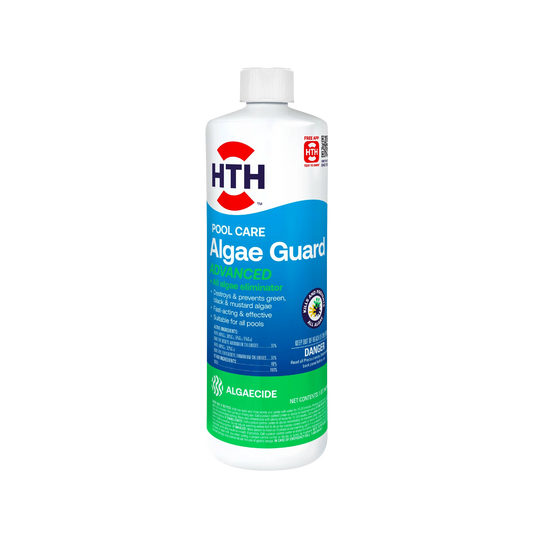
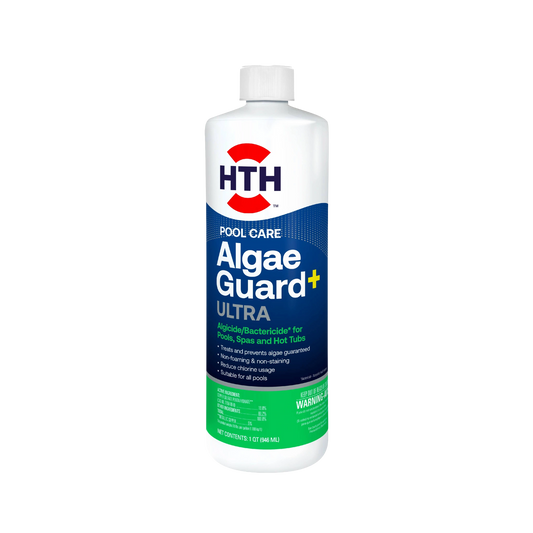
      Black algae is the most stubborn pool algae because it develops a protective outer layer. Treatment requires aggressively brushing the black spots with a stiff wire brush to break the protective crust, applying the shock dose directed for black algae, and using HTH Algae Guard Advanced or HTH Algae Guard+ Ultra as directed on the label. Brush again every 8 hours, run the filter continuously, and backwash or clean the filter daily. Multiple treatments are typically needed.

    • What is mustard algae and how is it different from green algae?

      Mustard algae, also called yellow algae, clings to pool walls, steps, and equipment as a yellowish-brown powdery or slimy coating. Unlike green algae, which floats freely, mustard algae is chlorine-resistant and extremely persistent. Use HTH Algae Guard Advanced or HTH Algae Guard+ Ultra as directed on the label, brush aggressively, and wash all swimwear and equipment that was in the pool during the outbreak.

    • Can algae grow in my pool even with correct chlorine levels?

      Yes, in certain conditions. Very high CYA, above 100 ppm, can block chlorine activity—a condition called chlorine lock—allowing algae to grow despite seemingly adequate free chlorine. High phosphate levels can also fuel algae growth, while some algae types, such as mustard and black algae, are more resistant to chlorine. Testing for phosphates and CYA can help reveal why algae persists despite adequate chlorine levels. If phosphate levels are high, use HTH Phosphate Remover according to label directions.

    • How long does it take algaecide to work?

      Algaecide begins working on contact but full results take 24–48 hours. For active blooms, you will start seeing color change (green turning grey or white) within 12–24 hours if shock was applied first. The pool will typically be clear in 24–72 hours depending on severity. Run the filter continuously and brush surfaces every 8–12 hours to help break up dead algae for filtration.

    • Does algaecide expire and how should I store it?

      Yes, algaecide can lose effectiveness over time. Keep products in their original sealed containers in a cool, dry area away from direct sunlight, heat, and freezing temperatures. Never store algaecide near oxidizers like pool shock—the combination can be hazardous.

    • How much pool algaecide should I use?

      The right pool algaecide dose depends on the HTH formula and whether you are treating visible algae or preventing regrowth. For HTH Algae Guard+ Ultra, the current directions call for 2 fl oz per 1,000 gallons for visible algae or 1 fl oz per 1,000 gallons for prevention. Other HTH Algae Guard products have different directions, so use the dose on the exact label and calculate your pool volume first.

    • Can I add pool shock and algaecide at the same time?

      No. Never mix pool shock and algaecide or add them together. Test and balance the water, apply HTH pool shock according to its label, then wait about 24 hours before adding a separate HTH algaecide. HTH Algae Guard+ Ultra is applied once a month for ongoing algae prevention, while HTH Shock products are used as directed. Always measure and apply the two treatments separately.

    • When should I add pool algaecide during opening?

      The order depends on the exact HTH products you are using. When treatments are purchased separately, HTH opening guidance recommends shocking first, then waiting 24 hours before adding liquid pool algaecide. If you are using the HTH Pool Care Kit, follow the packaged sequence: circulate and balance the water, add the included Algae Guard Granules and metal treatment, then add HTH Shock Ultra as directed. Never mix products together.

    • When can I swim after using an HTH pool algaecide?

      Check the exact formula because swim timing varies. HTH Algae Guard+ Ultra is designed so you can swim right away after it is applied as directed, while HTH Algae Guard Advanced requires a 15-minute wait. Keep people out while adding any pool chemical, keep the pump running as directed, and follow the product label.

    • Will pool algaecide clear cloudy water?

      Only when algae is contributing to the cloudiness. Use an HTH Algae Guard product as directed on the label, and use HTH pool shock when sanitizer is low or an active bloom needs stronger treatment. If the water is balanced and sanitized but still hazy, use HTH Clarifier Advanced. For severe cloudiness, use HTH Drop Out Flocculant if your filtration system allows you to vacuum to waste.